
- Classical Dance & Cultural Traditions
English Phonics & Communication Classes for Kids in Hyderabad
Build strong language foundations through sounds, words, stories and confident communication.
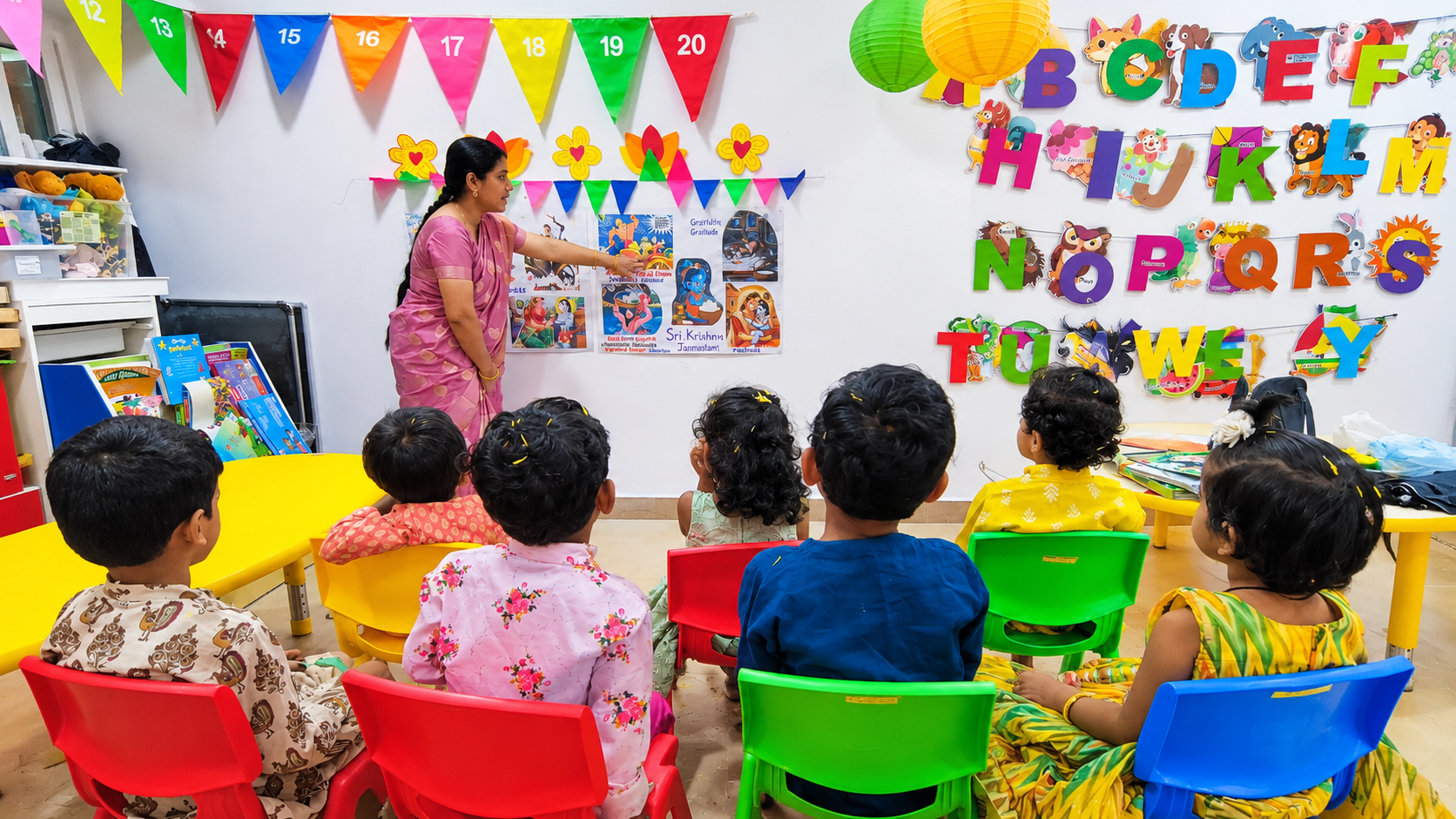
At Kalpavruksha Bala Vidya Bhavan, children develop early English language skills through engaging phonics activities, interactive conversations, storytelling and guided speaking exercises. Our approach nurtures clear pronunciation, vocabulary development, listening skills and the confidence to express thoughts and ideas.
-
Ages:
5–14 Yrs -
Location:
East Kalyanapuri -
Batches:
Mon & Fri -
Levels:
Beginner +
- Authentic Classical Dance Training

Experienced Gurus
Structured & patient pedagogy

- Enriching After-School & Weekend Batches
A Structured Introduction to Indian English Communication
English phonics and communication help children understand how language works and how to use it effectively in everyday life. By learning the relationship between letters and sounds, children begin to recognise words, develop early reading skills and communicate with greater clarity.
At Kalpavruksha, children explore English through playful, structured and age-appropriate activities that make language learning enjoyable. From identifying letter sounds and forming simple words to sharing stories and expressing ideas in sentences, each activity encourages children to become confident listeners, speakers and emerging readers.

Roots in Sacred Heritage
Knowledge is Supreme Wealth

“We believe integrating academic excellence with cultural and traditional values is essential for the holistic development of every child.”
2x
Weekly Guidance
100%
Personalized Focus
What Children Learn in English Phonics & Communication
A structured language-learning programme designed to develop phonetic awareness, vocabulary, early literacy and effective communication.
Letter Recognition & Phonics Sounds
Children learn to recognise letters and associate them with their corresponding sounds. Through songs, visual aids, games and repetition, they develop phonemic awareness and begin to understand how sounds form the foundation of spoken and written English.
Blending, Segmenting & Word Building
Children learn to blend individual sounds to read simple words and segment words into their component sounds. Age-appropriate activities help them recognise common sound patterns and gradually build the skills needed for independent reading and spelling.
Vocabulary Development & Sentence Formation
Through picture cards, conversations, themed activities and everyday experiences, children expand their vocabulary and learn to form meaningful sentences. They practise using new words in context and expressing their thoughts with increasing clarity.
Listening & Speaking Skills
Interactive listening games, question-and-answer sessions and guided conversations help children understand instructions, listen attentively and respond appropriately. These activities encourage clear speech and meaningful participation in conversations.
Storytelling, Rhymes & Reading Readiness
Stories, rhymes, picture books and role-play introduce children to the rhythm of language, new vocabulary and the joy of reading. Children learn to follow narratives, identify characters, sequence events and retell simple stories in their own words.
Everyday Communication & Public Speaking
Children practise introducing themselves, describing familiar objects, sharing experiences and speaking in front of small groups. These activities help them organise their thoughts, communicate politely and gradually develop confidence when speaking English.
How Our English Phonics & Communication Classes Work
Each session combines structured language instruction with interactive activities to help children learn naturally through listening, speaking, reading and play.
01
Sound Introduction & Listening Activities
Children are introduced to letter sounds, familiar words and simple listening exercises through songs, picture cards and engaging demonstrations. Activities are adapted to their age and current language level.
02
Phonics Practice & Word Building
Through sound recognition, blending games, rhymes and guided exercises, children practise connecting sounds with letters and forming simple words. Repetition and hands-on activities help reinforce their understanding.
03
Conversation, Stories & Expression
Children participate in guided conversations, storytelling, role-play and vocabulary games. They practise forming sentences, answering questions and expressing ideas in an encouraging environment.
04
Revision & Individual Feedback
Previously learnt sounds, words and language concepts are revised through interactive activities. Teachers provide guidance on pronunciation, comprehension and sentence formation while encouraging each child’s progress and participation.
Benefits of English Phonics & Communication
Strong language foundations support children’s early literacy, social interaction and confidence in the classroom and beyond.

Early Reading & Writing Readiness
Understanding letter sounds and sound patterns helps children prepare for reading, spelling and early writing.
Vocabulary & Language Development
Regular exposure to new words, stories and conversations helps children communicate their thoughts and understand others more effectively.

Listening & Comprehension
Listening games, storytelling and classroom discussions encourage children to follow instructions, understand information and respond meaningfully.

Clear Speech & Pronunciation
Phonics practice helps children become more aware of speech sounds and develop clearer pronunciation through guided repetition and listening.

Confidence & Self-Expression
Opportunities to speak, ask questions, tell stories and share experiences help children express themselves with greater confidence.

Memory & Concentration
Remembering sounds, following stories and participating in language games encourage attention, recall and sequencing skills.
Who Can Join English Phonics & Communication Classes?
Our English phonics and communication activities are designed for children at different stages of language development, from those discovering their first letter sounds to those developing early reading and speaking skills.
Beginner Batches
For children beginning their English language journey. Activities focus on listening, sound awareness, familiar vocabulary and simple verbal expression.
- Introduction to alphabet recognition and basic letter sounds
- Rhymes, songs and listening games
- Naming familiar objects, colours, animals and everyday items
- Simple greetings and self-introduction
Continuing Learners
For children ready to develop stronger sound recognition, early reading skills and more structured verbal communication.
- Letter-sound associations and phonics patterns
- Beginning sound recognition, blending and simple word formation
- Vocabulary expansion and sentence construction
- Practising everyday conversations and clear speech
Ages 2–3
Listening & Language Discovery
Exploring sounds, rhymes, familiar words and simple instructions through songs, picture books and playful interactions.
Ages 3–5
Phonics & Early Communication
Developing letter-sound awareness, vocabulary, listening comprehension, simple sentences and early reading readiness.
Ages 5-7
Reading Foundations & Confident Speaking
Strengthening sound blending, word recognition, early reading, sentence formation, comprehension and spoken communication.
Class Schedule & Timings
Every 60-minute session follows a balanced rhythmic journey to nurture body and mind.
- Weekly Batch Schedule
Batch 1 (Beginners)
5:00 PM – 6:00 PM
Days: Monday & Friday Evenings
Batch 2 (Intermediate)
6:00 PM – 7:00 PM
Days: Monday & Friday Evenings
- Batch Size: Small batches capped at 8–12 students to guarantee personal guidance.
Moments of Rhythm, Grace & Celebration
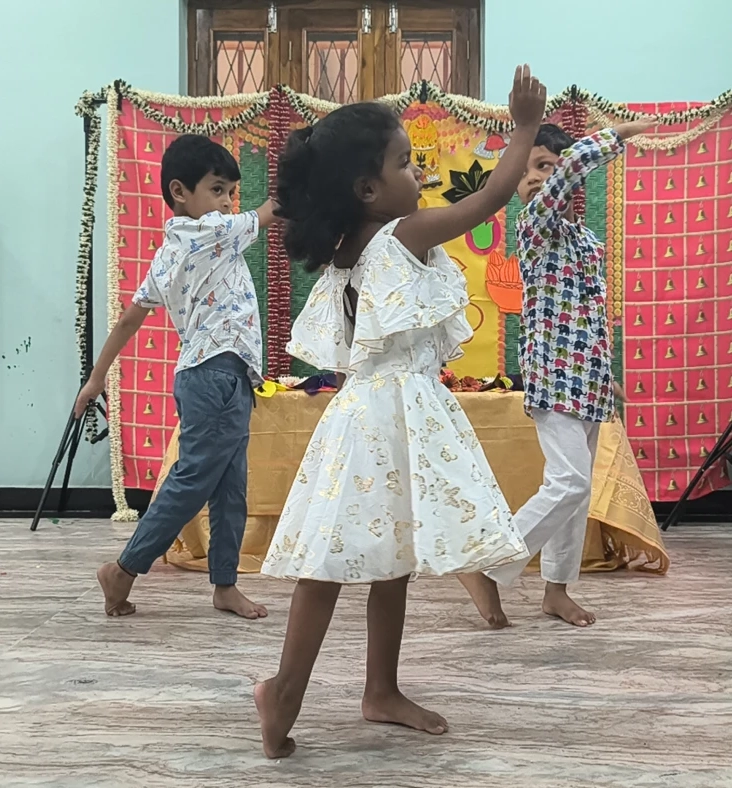
Capturing real student recitals, cultural celebrations, and expressive journeys at Kalpavruksha.

Student Showcase & Stage Recital
Performing classical adavu rhythms with poise
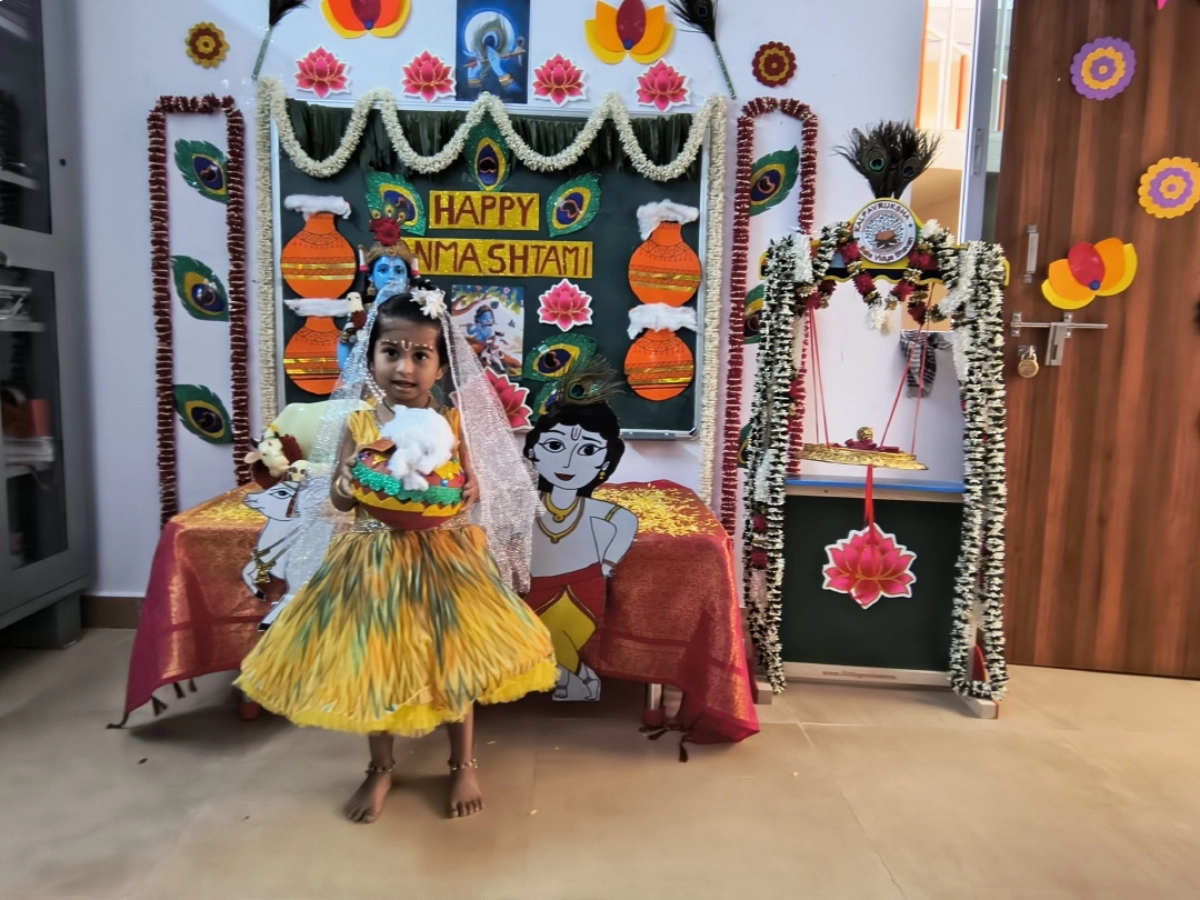
Festival & National Celebrations
Annual campus showcase performances
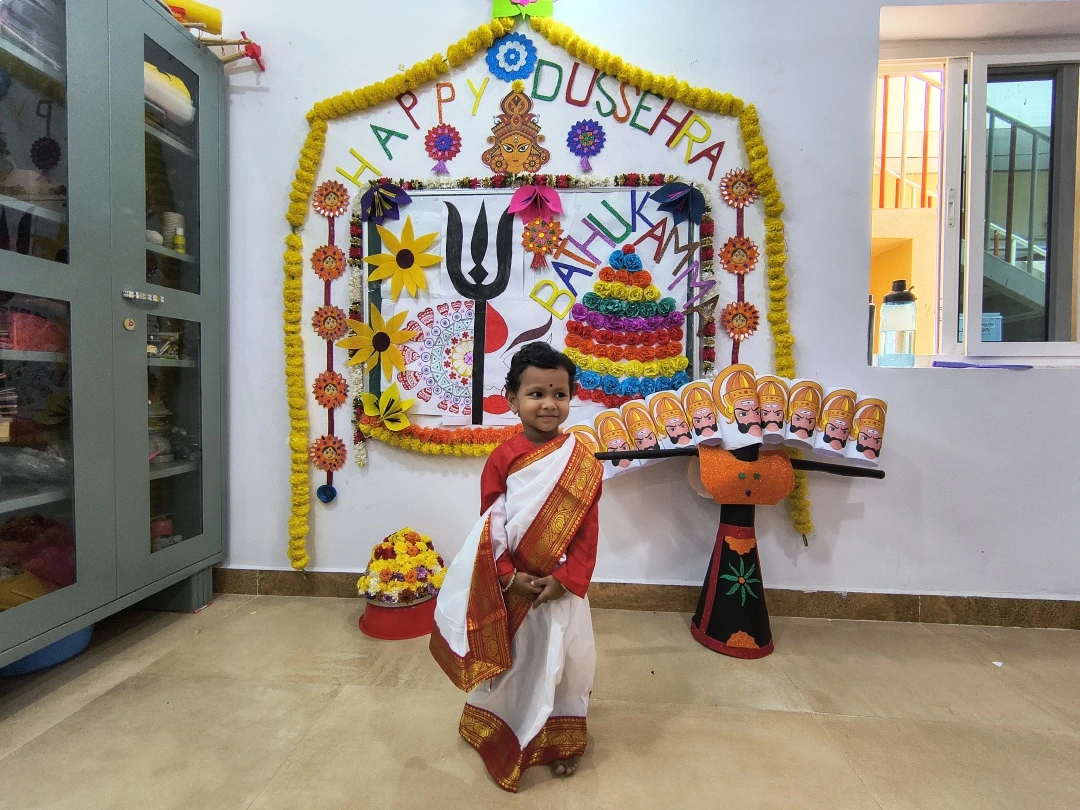
Cultural Art & Tradition
Hands-on immersion in Indian festive customs
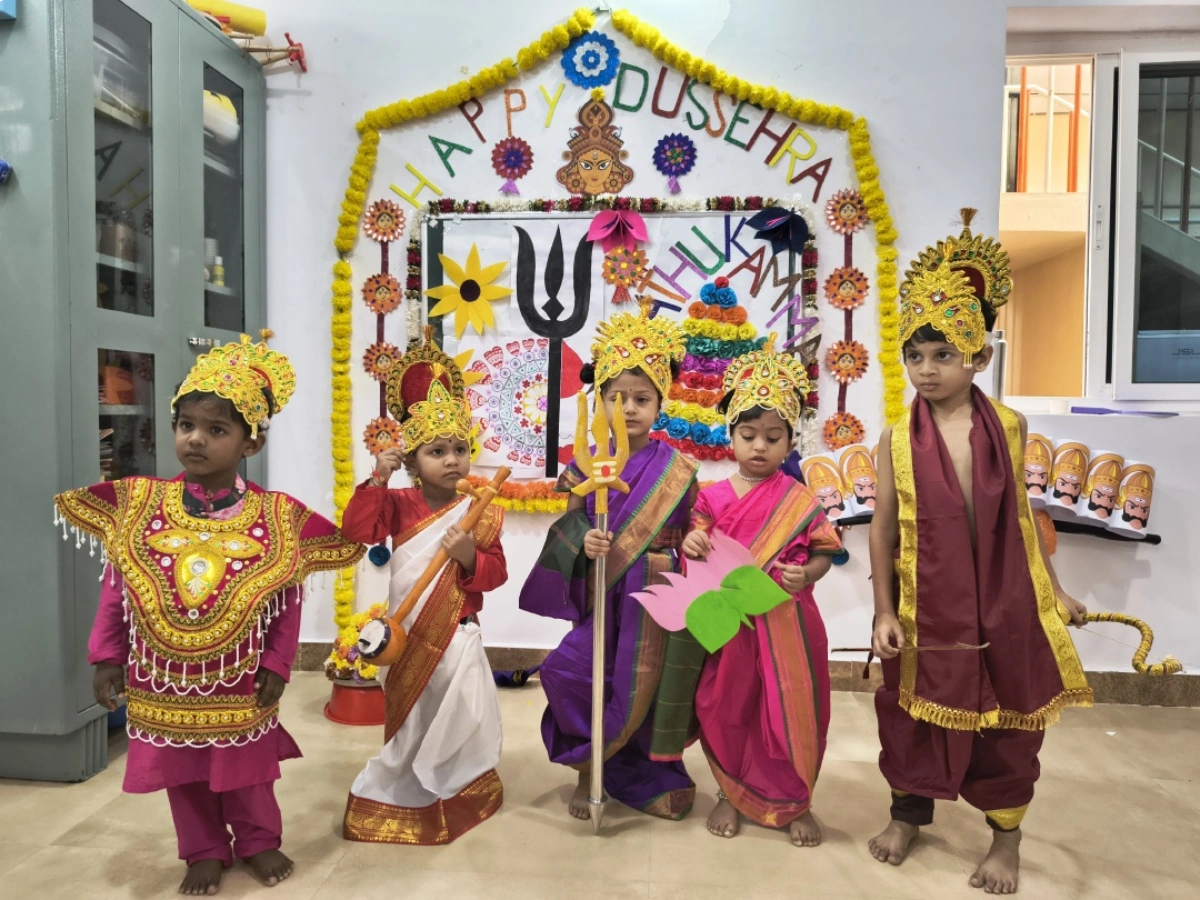
Mythology & Katha Storytelling
Contextual learning behind ancient verses
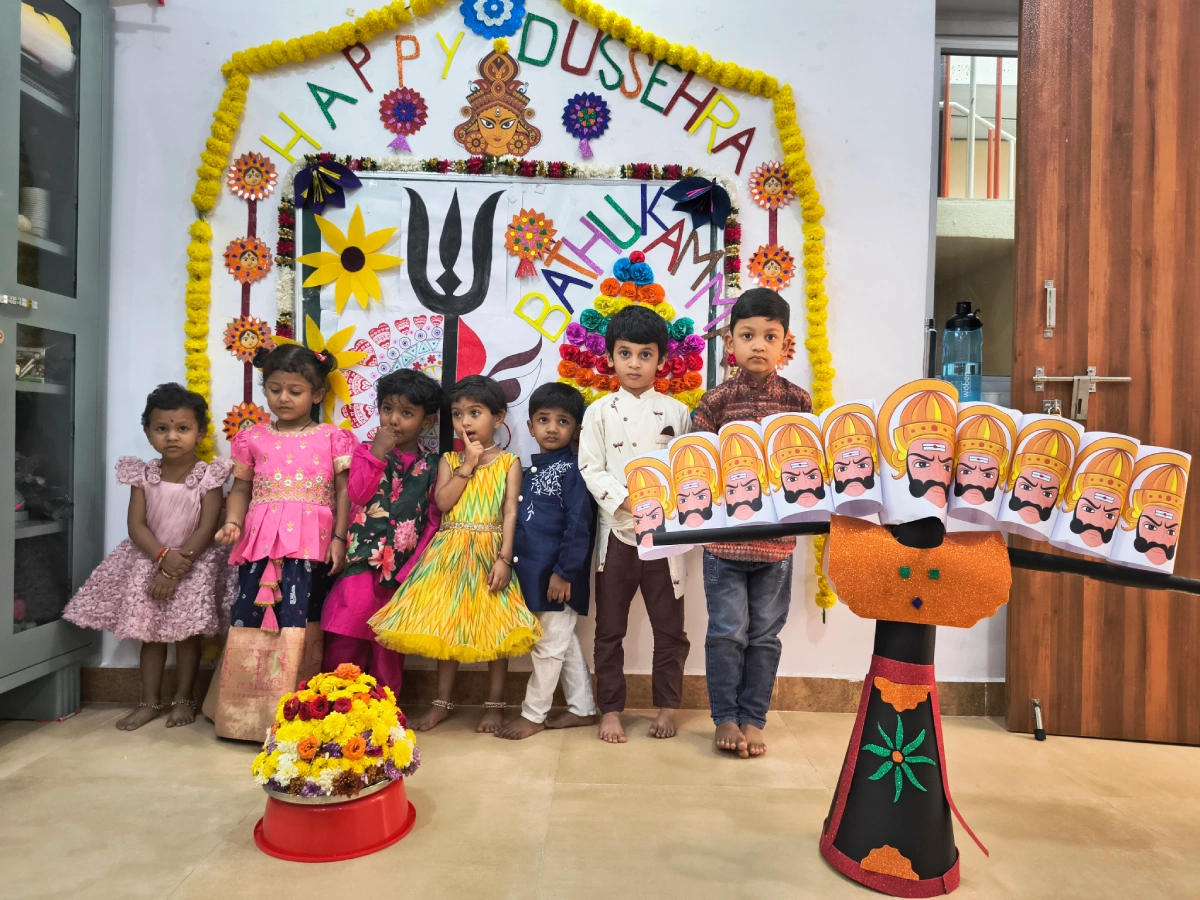
Joyful Group Synchronization
Team movement, mutual trust, and camaraderie
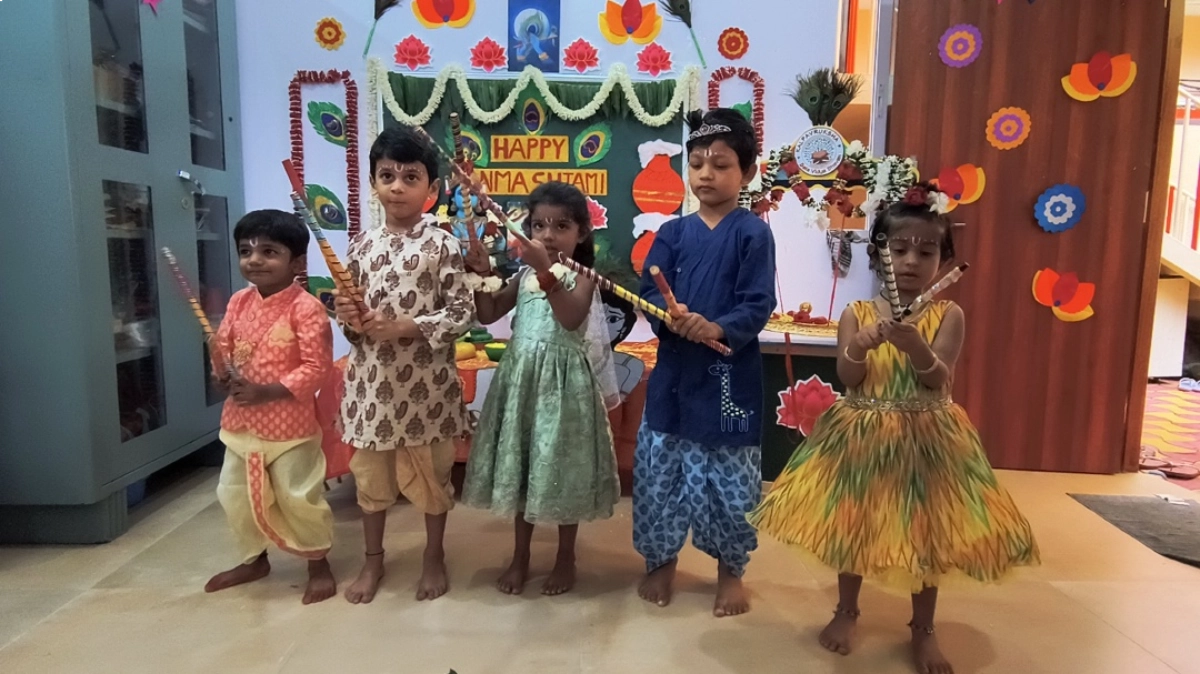
Postural Conditioning & Yoga
Flexibility, core stamina, and breathing

Moments of Rhythm, Grace & Celebration
Capturing real student recitals, cultural celebrations, and expressive journeys at Kalpavruksha.

Dedicated & Passionate Gurus
Instructors trained in authentic traditional lineages who specialize in making classical arts welcoming for young minds.

Value-Based Atmosphere
Non-commercial learning ethos that prizes moral values, mutual encouragement, and spiritual beauty over mere speed.

Safe, Peaceful Campus
Hygienic, serene classrooms situated right in East Kalyanapuri, offering a secure environment for evening classes.

Balanced with Academics
Carefully paced weekly schedules designed to relieve school tension without overloading the child's study routine.
Frequently Asked Questions
At what age can children start learning English phonics?
Children can begin developing phonological awareness from an early age through rhymes, listening games and playful language activities. Structured phonics instruction can be introduced as children become ready to recognise letters and connect them with sounds, typically during the preschool years.
Does my child need to know the English alphabet before joining?
No. Beginners can start with basic letter recognition, sound awareness and familiar vocabulary. Activities progress gradually, helping children build their language skills according to their individual learning level.
What is the difference between phonics and communication skills?
Phonics teaches children how letters and sounds work together to support reading and spelling. Communication activities focus on listening, speaking, vocabulary, sentence formation and expressing ideas clearly. Together, these skills support children’s overall English language development.
How often are English phonics and communication classes conducted?
Class frequency and timings depend on the current programme schedule. Please contact Kalpavruksha Bala Vidya Bhavan for details about available batches and lesson timings.
Where are the English phonics and communication classes conducted?
Classes are conducted at our main campus: Kalpavruksha Bala Vidya Bhavan, 2-19-90/1, Road No. 2, East Kalyanapuri, Hyderabad – 500039.
Are English phonics and communication classes suitable for children who speak another language at home?
Yes. Children can develop English language skills even if another language is spoken at home. Through guided listening, vocabulary-building activities, stories and conversations, they gradually become more familiar with English sounds and everyday expressions.
What will my child learn in these classes?
Children develop letter-sound recognition, phonics awareness, vocabulary, sentence formation, listening comprehension and spoken communication. Depending on their age and learning level, they may also practise blending sounds, reading simple words, storytelling and speaking before small groups.
English Phonetics Classes at Kalpavruksha, Hyderabad
Kalpavruksha Bala Vidya Bhavan offers english classes for children at its campus in East Kalyanapuri, Hyderabad. Parents looking for children’s classical dance classes in Hyderabad can contact us to enquire about current batches and availability.
-
Campus Address:
2-19-90/1, Road No. 2, East Kalyanapuri, Hyderabad – 500039 - +919500327546

Center Location
Kalpavruksha Bala Vidya Bhavan
Explore More Activities
at Kalpavruksha
Arts & Crafts
Personality Development
- Admissions Open • Weekend & Evening Batches